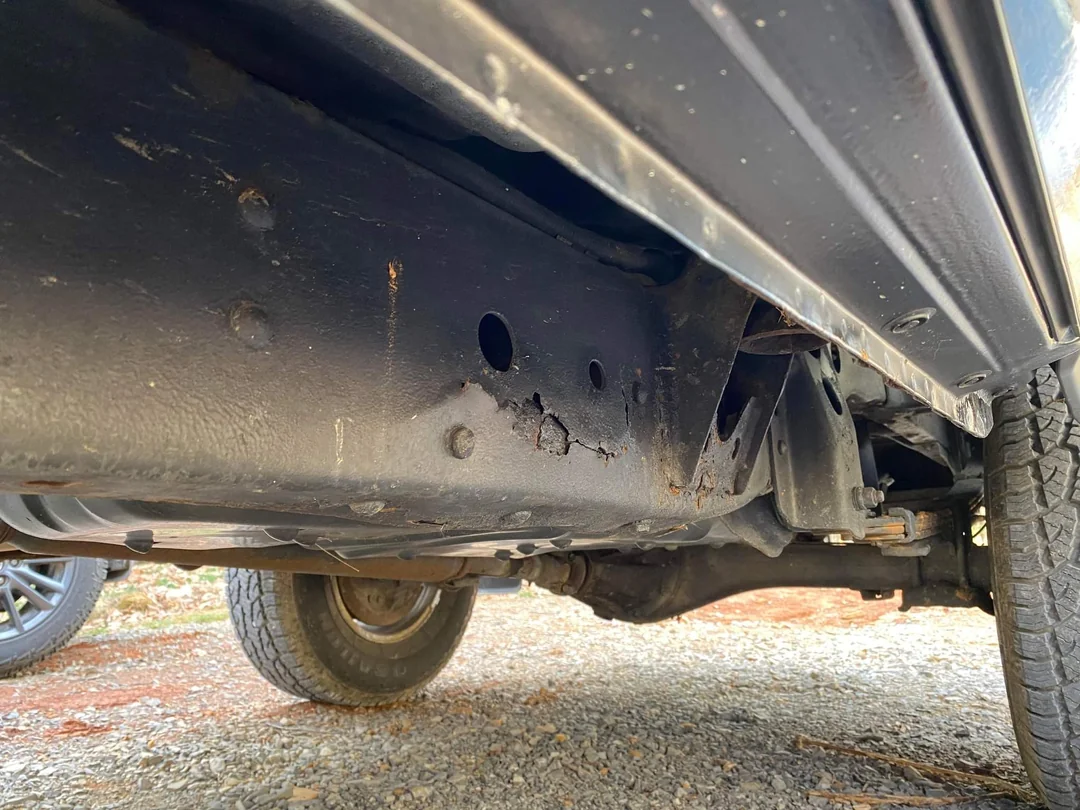
A pickup frame can look solid from ten feet away and still be losing the fight underneath. That is why frame rust problems on older Toyota Tundra trucks became more than a cosmetic headache for American owners who drive through snow, slush, and salted winter roads. The concern centered on structural corrosion that could affect parts tied to the spare tire, braking system, and fuel tank support, not a little orange surface rust on a bracket.
For a truck family built around dependability, that stung. Owners in places like Michigan, New York, Pennsylvania, Maine, and Wisconsin did not buy full-size pickups expecting the frame to become the weak point. Many were using these trucks for work, towing, home projects, and daily family duty. When rust reaches the structure that holds key systems in place, the conversation changes from resale value to road safety. Drivers who follow trusted vehicle safety updates know that recalls are not paperwork problems. They are warnings that something under the vehicle deserves attention before it becomes expensive, dangerous, or both.
Why Toyota Tundra Frame Rust Problems Became a Safety Issue
Rust becomes serious when it attacks parts that carry load, hold components, or protect the driver’s ability to stop. The Toyota Tundra case mattered because the concern was tied to the rear cross member and nearby frame areas on certain 2000 through 2003 trucks, especially those exposed to heavy road salt in cold-weather U.S. states. Toyota’s campaign documents described corrosion that could lead to spare tire separation, rear brake line issues, and even fuel tank mounting concerns in rare cases.
Why rear cross member rust is different from normal surface corrosion
A little scale on a truck frame does not always mean the truck is unsafe. Older pickups live hard lives, and surface rust is common after years of rain, snow, gravel, and winter road treatment. The real question is whether the metal still has the strength to support what it was built to carry.
Rear cross member rust is different because that area helps hold parts that sit low, exposed, and often ignored. On affected Tundras, Toyota’s recall materials focused on the rear cross member, brake lines at the proportioning valve, spare tire carrier, and surrounding components. That is not trim. That is not a paint flaw. That is the underside architecture doing daily work while most owners never look at it.
The counterintuitive part is that a truck can still drive fine while the risk is growing. The engine may start, the transmission may shift, and the bed may still haul mulch from Home Depot. Underneath, though, corrosion can weaken a mounting point long before the driver feels anything through the steering wheel.
How road salt damage turns from ugly to unsafe
Road salt damage does not attack evenly. It collects in seams, ledges, cross members, boxed areas, and places where wet grit sits after a storm. A truck parked in a heated garage after a salted commute can even stay damp underneath longer than one left cold outside.
That matters for American owners in the Snow Belt. A Tundra used in Ohio winters may face a different life than one used in dry parts of Arizona, even if both trucks show the same mileage. The odometer tells you how far the truck traveled. It does not tell you how much salt water dried inside the frame.
Toyota’s documents connected the condition to cold climate areas with high road salt use and listed states such as Connecticut, Illinois, Maine, Michigan, New York, Pennsylvania, Vermont, Wisconsin, West Virginia, and others, plus the District of Columbia. That state list matters because it shows how corrosion history often follows climate, not brand loyalty or owner care alone.
What Recall Actions Actually Covered for U.S. Owners
A safety recall does not mean every truck gets the same repair the same day. It means the manufacturer and dealer network must follow a remedy path tied to the defect. For these Tundras, Toyota’s documents described inspection first, then action based on what the dealer found. Some trucks received corrosion-resistant compound. Others needed component replacement. Severe cases could require a different repair path when mounting locations were too far gone.
How a Tundra recall inspection works
A Tundra recall inspection starts with the VIN, not a guess from a forum thread. Toyota’s recall lookup lets owners check safety recalls and service campaigns for Toyota, Lexus, and Scion vehicles sold in the U.S., U.S. territories, and Mexico by entering a license plate and state or a 17-digit VIN.
The dealer then checks the areas named in the campaign. On the affected trucks, that meant looking at the rear cross member and nearby parts such as the brake lines, fuel tank mounting system, and spare tire carrier. A quick glance under the bumper in a driveway is useful, but it is not the same as a campaign inspection done under lift lights by a dealer following Toyota’s procedure.
The strange part for owners is that the truck may pass one part of the inspection and still have rust elsewhere. That feels unfair, but recalls are written around specific defects and named components. This is why you should ask the service adviser to separate two questions: “Is my truck covered under the campaign?” and “Is the rest of my frame safe enough to drive?”
Why Toyota frame corrosion remedies were not one-size-fits-all
Toyota frame corrosion remedies depended on severity. If the rear cross member and fuel tank mounting cross members did not show significant corrosion, dealers could apply corrosion-resistant compound to the rear portion of the frame. If significant corrosion affected the rear cross member enough that it could no longer safely support the spare tire, Toyota’s materials described replacing affected components and then applying protection afterward.
The harder cases were the ones where the corroded part could not be replaced cleanly because the surrounding frame had also weakened. That is where owners often felt trapped. A small part can be replaced. A mounting area that no longer has enough solid metal turns a repair into a bigger structural decision.
A recall is not a magic wand. It is a defined repair process. That is why documentation matters so much when an owner believes the truck is unsafe but the campaign result does not match what they see under the vehicle.
How Owners Should Inspect, Document, and Respond
Owners should not wait for a clunk, leak, or failed inspection sticker before paying attention. Rust gives clues before it becomes a roadside problem, but those clues hide in dark, dirty places. The best approach is simple: inspect carefully, document clearly, check the VIN through official sources, and speak to a dealer before assuming the truck is either fine or doomed.
Where to look before a dealer visit
Start at the rear of the truck. Look around the spare tire carrier, rear cross member, shock mounts, brake line routing, fuel tank straps, and the inner sides of the frame rails. Use a flashlight, not a phone screen from three feet away. You are looking for swelling metal, flaking layers, holes, cracked mounts, wet brake lines, or areas that look like packed brown pastry.
A rubber mallet can reveal more than a photo, but owners should avoid aggressive hammering on a frame they already suspect is weak. The goal is not to punch through metal in the driveway. The goal is to see whether the truck needs a professional lift inspection before it keeps hauling a trailer or carrying family on the highway.
Pay attention to uneven rust. One side may look worse because of road crown, drainage, previous repairs, or how salt spray hits the underside. A clean-looking outer rail can also hide a rough inner surface. This is where older pickups fool people.
What photos and service records can prove
Good records turn a vague complaint into a useful case. Take wide photos that show the truck’s location and close photos that show the actual corrosion. Include the VIN plate, odometer, frame areas, spare tire mount, brake line area, and fuel tank strap area. Keep dealer inspection sheets, declined repair notes, campaign documents, and any state inspection results.
A clear timeline helps. Write down when you bought the truck, where it lived, when you first noticed rust, and what each dealer or repair shop told you. If the truck came from a cold-weather state, keep old registration or title history when available. That can matter when campaign language refers to where a vehicle was sold or registered.
This is not about arguing louder at the service desk. It is about making the problem easy to understand. A service manager can dismiss a blurry underbody photo. A dated packet with VIN, mileage, inspection notes, and clear images is harder to wave away.
Used Tundra Buying Decisions After the Rust History
The rust history does not mean every older Tundra is a bad buy. Some trucks were repaired, protected, or kept in mild climates. Others lived under salt trucks for twenty winters and now look cheaper than they are. The mistake is shopping by reputation alone. Toyota’s name matters, but steel still obeys weather, chemistry, and time.
How to judge a truck from a snow state
A used Tundra from a snow state needs an underside inspection before price talk gets serious. Do not let clean paint, new tires, or a polished interior distract you from the frame. Sellers know buyers fall in love from the outside first. Rust lives where emotion does not look.
Ask for the VIN before you drive across town. Run it through Toyota’s recall page and NHTSA’s recall resources. NHTSA explains that recalls are issued when a manufacturer or the agency finds that a vehicle, equipment, tire, or car seat creates an unreasonable safety risk or fails to meet minimum safety standards. That definition should change how you read a listing that says “normal rust for age.”
A smart buyer brings a flashlight, work clothes, and a willingness to walk away. Better yet, pay an independent shop to lift the truck. The money spent on a pre-purchase inspection can save you from owning a bargain that cannot pass a safety inspection six months later.
When walking away saves more than negotiating
Negotiating rust damage feels clever until the repair estimate lands. Frame work is not like replacing a mirror or a radio. Structural corrosion can involve brake lines, tank straps, suspension mounts, cross members, labor hours, seized bolts, and parts availability. A low purchase price can disappear in one shop visit.
The unexpected truth is that the cheapest rusty truck is often the most expensive one. A clean southern truck with higher mileage may be a better buy than a low-mile northern truck with a frame that flakes in chunks. Mileage wears parts. Salt attacks structure.
Walk away when you see holes near mounts, heavy flaking around the rear cross member, wet or crusted brake lines, fuel tank strap decay, or a seller who refuses a lift inspection. A good truck can survive questions. A bad one needs darkness.
Conclusion
Older Tundras earned loyalty because they worked hard without drama, but loyalty should never make an owner ignore the underside. Steel does not care how dependable the engine has been. Once corrosion reaches load-bearing parts, the truck needs attention from someone who can inspect it correctly and document what they find.
The safest move is also the plainest one: check the VIN, inspect the frame, and keep records. If you own a 2000 through 2003 truck with possible campaign history, contact a Toyota dealer and ask for the recall status in writing. If you are shopping for one, do not buy until the frame has been inspected on a lift.
Frame rust problems do not always announce themselves with noise, warning lights, or bad handling. They can sit quietly under a truck that still feels strong. Take the underside seriously before the road makes the decision for you.
Frequently Asked Questions
What years of Toyota Tundra had frame corrosion recall concerns?
Certain 2000 through 2003 Toyota Tundra trucks were covered by major frame corrosion recall actions tied to the rear cross member and nearby components. Owners should still check by VIN because campaign eligibility depends on the exact vehicle history and recall status.
How can I check if my Toyota Tundra has an open recall?
Use Toyota’s official recall lookup or NHTSA’s recall search with your 17-digit VIN. A dealer can also check campaign history and tell you whether prior recall work was completed. Always ask for written confirmation for your records.
Is surface rust on a Tundra frame always unsafe?
Surface rust alone does not always make a truck unsafe. The concern grows when rust causes flaking, holes, swelling metal, weak mounts, damaged brake lines, or compromised cross members. A lift inspection gives a much better answer than driveway guessing.
What does rear cross member rust mean on a pickup truck?
Rear cross member rust means corrosion is affecting a structural support area near the back of the frame. On affected Tundras, that area mattered because it was tied to the spare tire carrier, brake line area, and nearby frame support points.
Can road salt damage a truck frame even with low mileage?
Low mileage does not protect a frame from salt exposure. A truck driven short winter trips on treated roads can hold salty moisture underneath for years. Climate, storage, washing habits, and road treatment often matter as much as mileage.
Should I buy an older Toyota Tundra from a northern state?
A northern-state Tundra can be worth buying only after a proper underside inspection. Look for frame perforation, cross member damage, brake line corrosion, and fuel tank strap condition. A clean inspection matters more than seller claims.
What should I photograph before taking a rusty Tundra to a dealer?
Photograph the VIN, odometer, rear cross member, spare tire carrier, brake lines, fuel tank straps, frame rails, and any holes or heavy flaking. Use wide shots and close-ups. Keep every dealer note, inspection report, and repair estimate.
Can a recalled Tundra still have rust after campaign work?
Yes, a truck can still develop rust after recall or campaign work, especially if it keeps driving in salted winter conditions. Prior repair history matters, but it does not replace current inspection. Always judge the frame as it sits today.